
Why Open Days in Retirement Feel Hard—and What Actually Helps
You can love the freedom of retirement and still feel unsettled by wide-open days.
I know that feeling firsthand, and it’s one I see again and again in the women I work with.
About six months into my own retirement, I remember one morning when a small wave of fear caught me off guard.
In many ways, I was (and still am!) enjoying retirement. I love slow mornings. I love not having meetings. I love the lack of daily pressure. And yet, out of nowhere, I found myself thinking: What if this changes?
People often describe early retirement as a “honeymoon phase.” And while that can be true, even that very idea can create anxiety. What if the things I’m enjoying lose their spark? What if all this space turns into boredom—or loneliness?
Later that same morning, my day went sideways in a very ordinary way.
I skipped the habits that usually ground me. I got pulled into the news. Then into caregiving responsibilities for my 95-year-old dad. By mid-morning, I felt rushed and oddly behind—despite the fact that no deadlines existed and no one was waiting for me to turn anything in.
That’s when it clicked: this is what unstructured days can do.
If you’re new here:
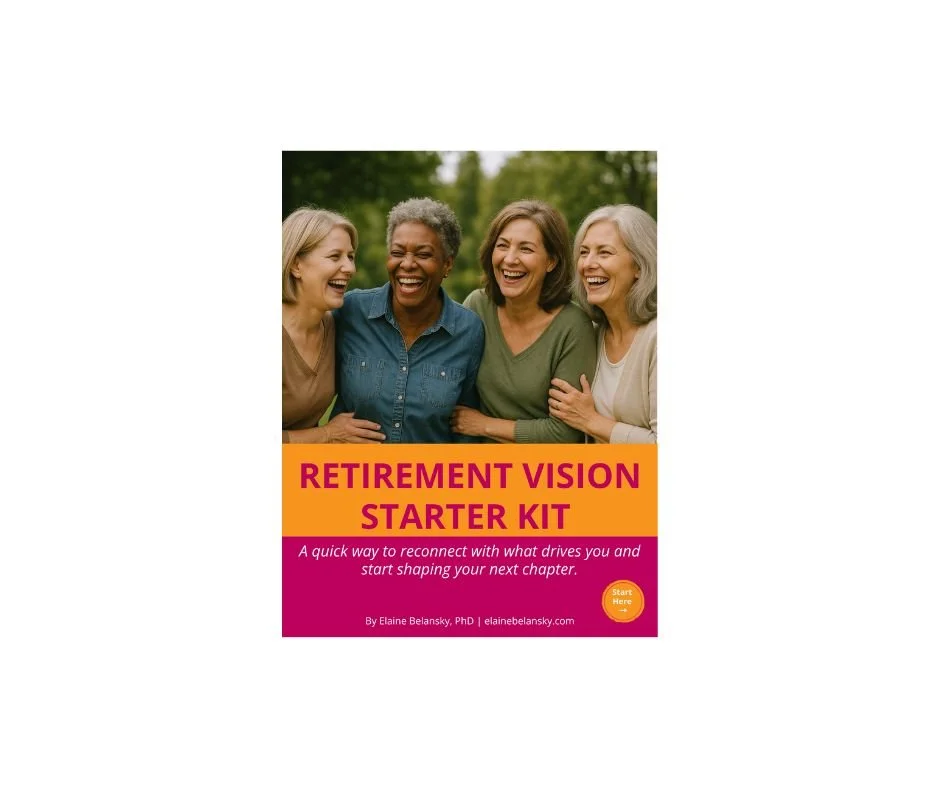
If you want a straightforward place to begin—whether you’re already retired or starting to seriously imagine what comes next—the Retirement Vision Starter Kit is here. It’s research-informed, clear, and takes about 20 minutes.
Why Open Time Can Feel So Unsettling
Retirement is supposed to feel freeing. No calendar. No deadlines. No one telling you where to be.
And yet, many women feel off-balance once the structure of work disappears.
For years, work organized your days. There were projects to move forward, people waiting on you, and a built-in sense of when a day had “counted.” When that rhythm vanishes, time can start to feel diffuse—harder to settle into.
I hear this again and again:
“I’m financially ready, but I don’t know how my days will actually look.”
“I want freedom—but I don’t want to drift.”
“I’m worried my world will shrink.”
This shows up especially for women who spent decades managing multiple roles at once—demanding careers, caregiving, emotional labor, leadership. Retirement doesn’t erase that complexity. It removes the structure that once held it together.
And when there’s no rhythm, something else often fills the space: scrolling the news one more time, saying yes out of habit, or carrying a low-grade sense that you should be doing something—even if you can’t quite say what.
1. Take Stock of What Used to Organize Your Days
Before retirement, your sense of momentum didn’t come from motivation alone. It came from structure.
Meetings created forward motion. Deadlines created boundaries. Responsibilities created a reason to begin—and end—your day.
When women feel unmoored in retirement, it’s often not a loss of purpose. It’s a loss of rhythm.
Reflection prompt:
Before retirement, what organized your days—even if you didn’t love it?
This isn’t about recreating work. It’s about noticing what disappeared along with it.
2. Regain Your Footing When an Open Day Starts to Spiral
Here’s the truth: when a day goes sideways, self-judgment only makes it worse.
More scrolling. More busyness. More telling yourself you should be better at this by now.
I still have to catch myself here—especially on days when caregiving, time lost to life logistics, or trying to be present and supportive when my husband shares anxieties about world events takes over and I can feel myself getting scattered.
Instead of rescuing the day, try a reset.
A same-day reset that actually helps:
• Choose one grounding action (5–15 minutes), like a short walk, journaling, or sitting with a cup of tea.
• Choose one meaningful block that fits your energy, such as a creative project, a conversation, or a task that’s been tugging at you.
You’re not fixing your life. You’re just steadying the day you’re already in.
3. Accept That This Is a Real Transition—and Support Matters
Many capable women carry an unspoken belief that they should have this figured out by now.
But retirement is a psychological transition, not just a logistical one. You’re learning a new relationship with time, identity, and choice—without many cultural models that actually support women in doing this well.
For many women, this shows up as decision fatigue (What should I do today?), a nagging sense of being behind for no clear reason, or discomfort when no one is expecting anything from them.
This is especially common for women who are used to feeling competent—and suddenly don’t.
Support here isn’t about weakness. It’s about recognizing that this is new terrain.
4. Plan Forward Without Turning Retirement Into Another Job
When women hear “structure,” they often imagine rigid schedules and packed calendars.
That’s rarely what helps.
What actually helps is light, flexible structure—anchors and rhythms that give your time some shape without boxing you in.
Anchors are small, repeatable touchpoints:
reading with coffee
walking outside
journaling
movement
checking in with yourself before the day fills up
Rhythms give the week a sense of flow:
themed days (connection, learning, creativity)
grouping demanding tasks together
starting the day with one meaningful anchor
consistent beginnings or endings to the day
These patterns help your time feel intentional rather than accidental—and more like it actually belongs to you.
👉 Want a practical way to get oriented for the day-to-day reality of retirement?
Grab the free Retirement Vision Starter Kit here.
5. Act—Don’t React—to the Discomfort of Open Time
You don’t need a master plan. I certainly didn’t.
What helped me—and what I see help my clients—are small experiments. Nothing fancy. Just trying things and paying attention.
One woman told me that joy felt like too much pressure. Enjoyment felt doable. Walking her dogs. Lingering over a conversation. Letting a good moment last instead of rushing on.
That’s often where steadiness begins.
A Simple Experiment to Try This Week:
Choose one rhythm that appeals to you right now.
Pick one anchor (5–20 minutes).
Add one meaningful block.
Leave the rest open.
Notice what steadies you. Notice what drains you. That information is worth paying attention to.
A Realistic Note About Health
Health changes can interrupt plans and limit energy. At the same time, retirement often offers something many women haven’t had in decades: time to respond instead of push through.
When your days already have some shape, disruptions don’t erase everything. There’s something familiar to return to.
Why Claiming Your Time First Matters
When days are undefined, it’s easy for other people’s needs to take over—especially if you’ve spent a lifetime being reliable and responsive.
Learning to water your own garden first isn’t selfish. It’s how your days stop disappearing before you’ve had a chance to actually live them.
A Place to Start
If this feels familiar, you’re not alone.
If you want a straightforward place to begin, the free Retirement Vision Starter Kit is here — a practical way to get your footing in retirement.
If you’re feeling stuck and unsure what comes next, that’s exactly what my Retirement Clarity Session is designed for: turning all this thinking into one grounded next step.
Related posts to keep exploring:
I Thought I Knew Who I Was — Until Retirement Made Me Rethink It
Peace and Quiet Sounded Perfect—Until I Had Too Much of It in Retirement
Share this with a friend: If you know a woman who’s retired—or close to it—and feels unsure about the life part, use the share buttons to send this post to her.
A version of this post was published in Sixty & Me.
About Elaine
Elaine Belansky, PhD, is a retirement transition coach who helps thoughtful, accomplished women design a next chapter that feels intentional, meaningful, and fully their own.
After a 30-year university career in public health and education, Elaine now supports women navigating the identity shifts, emotional complexity, and loss of structure that often accompany retirement. Drawing on psychological research and lived experience, she guides clients through a structured process to clarify who they are becoming, design a weekly rhythm that supports energy and engagement, and choose ways to contribute that feel purposeful — not obligatory.
Her work helps women move from feeling unmoored or uncertain to feeling grounded, energized, and confident about the life they’re building now.
