

Retirement Transition Coach for Professional Women |
PhD, Social Psychology | Certified Life Coach
Member of:


Maybe some of this
sounds familiar.
You built a career you were proud of. You showed up, delivered, and earned real respect along the way. You were the expert. The go-to person. The one people came to when they needed something figured out.
And then you retired — or you’re getting close — and the calendar opened up. Instead of feeling free, you mostly feel unmoored, like the scaffolding that held your days together got removed overnight and nobody warned you.
You might be asking yourself:
Who am I without my title, my team, my routine?
I thought I’d feel relieved. Why don’t I feel better than this?
If you recognized yourself in any of that — you’re having a very normal response to a genuinely hard transition. I’ve heard some version of those thoughts from almost every woman I’ve worked with. It’s what happens when the external structure that organized your sense of self for decades disappears all at once. Nobody prepares professional women for that part — and a hobby list isn’t going to cut it.
What surprised me was that knowing what I wanted turned out to be the easier part. Giving myself permission to want it was harder, and that’s exactly where this work begins.
★ ★ ★ ★ ★
I highly recommend working with Elaine. She is an exceptionally gifted listener and asks insightful and clarifying questions. Her warmth, humor, and intelligence make our time together both productive and enjoyable. I always feel seen, energized, and supported.
— Ann, Clinical Psychologist
I’ve been exactly where you are.
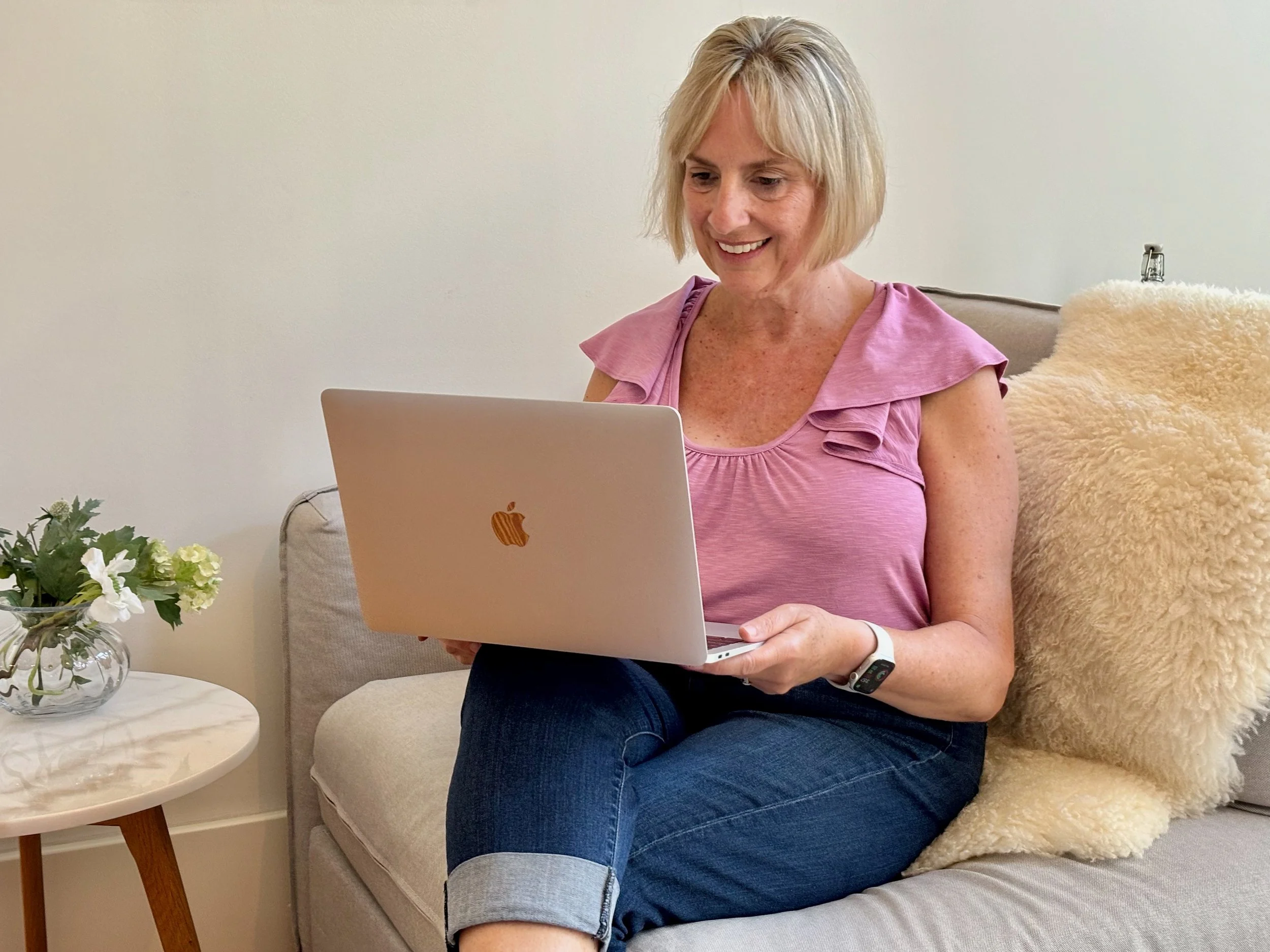
A year before I left my job, I was thrilled. I had a running list on my phone of everything I'd finally do. I practically had to hide my excitement from people in the college. I was ready.
But as the date got closer, a different set of questions started showing up. What am I actually going to do all day? Will I get bored? Lose my sense of self? Feel irrelevant? (I'll be honest: somewhere in there was also a low-grade worry about brain deterioration. That was a fun few months.)
I looked for resources to help me navigate the emotional side of this — the identity piece, the structure piece, the 'who am I now?' piece — and found almost nothing aimed at professional women. So I built it myself.
That's what this work is. Structured, psychologically grounded coaching for women who planned everything except how to actually feel okay on a weekday morning with nothing on the calendar. I don't do the money side. Your financial planner has that covered, and I'm here for everything else.
Before all this, I spent 30 years as a social psychologist and professor doing public health and education research. For 19 of them I was at the University of Colorado’s medical campus, first as associate director and then director of the Rocky Mountain Prevention Research Center. For the last seven, I directed the Center for Rural School Health & Education at the University of Denver. At both, we designed and studied wellbeing programs that helped schools create real, lasting change. I spent my career learning how hard genuine change is, and it turns out knowing the research and living the transition are two very different things.
Why this background matters for this work
A lot of coaches can help you set goals. Fewer can explain why the goals aren't working. I bring a research foundation in social psychology, 30 years of designing programs that changed real behavior in real institutions, and the personal experience of navigating this transition myself — including all the parts that surprised me.
That combination means I understand not just what you're experiencing, but why — and what research says actually helps. Every client I've worked with has shaped the method further. The patterns across their experiences, the moments of breakthrough, the places women consistently get stuck — all of it is embedded in how we work together.
I also hold a professional coaching certification — which means I know how to ask the right questions and actually listen to the answers, not just share what I know.
PhD in Social Psychology. 30 years designing wellbeing programs. Living this transition myself. That's the combination I bring to every session.
What I believe
Retirement is the start of something, and it doesn't design itself.
Structure makes freedom feel good rather than terrifying.
Clarity comes from trying things, not thinking harder. Small experiments teach you more about yourself than months of deliberating ever will.
Putting yourself first in this chapter is overdue. You've spent decades showing up for everyone else. This one's yours.
Knowing what you want and actually living it are two different skills. The gap between them is where a lot of us get stuck — and where coaching does its most important work.
The frameworks behind the work
The method is grounded in two research-based frameworks. The first is SHARP, which I developed specifically for this transition: self-compassion, hearing your own voice again, authoring your own life, tending your relationships, and giving yourself permission — because nobody hands you that permission in retirement; it has to come from you.
The second is PERMA, Martin Seligman’s well-being model, which I’ve adapted for retirement: joy, engagement, relationships, meaning, and accomplishment are the foundation of a good life, and they can be cultivated at any age. We work on the inner conditions that make a purposeful life possible, and then we build one.
How I work
Every client comes in at a different place — some are freshly retired and disoriented, some are two years in and still waiting for it to click, some are still in their careers and nervous about what comes next. The work always starts where you actually are, not where you think you should be.
Sessions are one-on-one on Zoom, roughly every two weeks. Between sessions you receive a custom packet grounded in psychology and transition theory — the same frameworks we work with in our sessions — so the thinking you do in between is just as intentional as the time we spend together. Several clients have told me the packet work alone gave them clarity they'd been after for months. That's what structure does: it helps you hear your own voice.
And because this is a real partnership, our connection doesn't start and stop with each session. Email me when something comes up — an insight, a question, something you're wrestling with. I write back.
What surprises most clients is how much of the work happens between sessions — in the packet exercises, in the small experiments, in the moments when something clicks on an otherwise ordinary morning.
★ ★ ★ ★ ★
Working with Elaine, I've grown so much. She creates a space where it's easy to be honest and think through things out loud. She'll give it to you straight, but always with so much care and love that you feel supported and nurtured, never judged.
— Savannah, Professor
Where are you right now?
Three different places to start, depending on where you are.
Just starting to think about this
Grab the free Starter Kit. 20 minutes, five exercises, a clearer picture of where you are. Zero pressure.
Ready to think this through with someone
Book a Clarity Session. One 45-minute conversation, a short pre-session form, one concrete next step. $97.
You're considering ongoing coaching
Schedule a free 30-minute call. We'll talk about where you are, what you're looking for, and whether working together makes sense. No pressure — just a real conversation.